





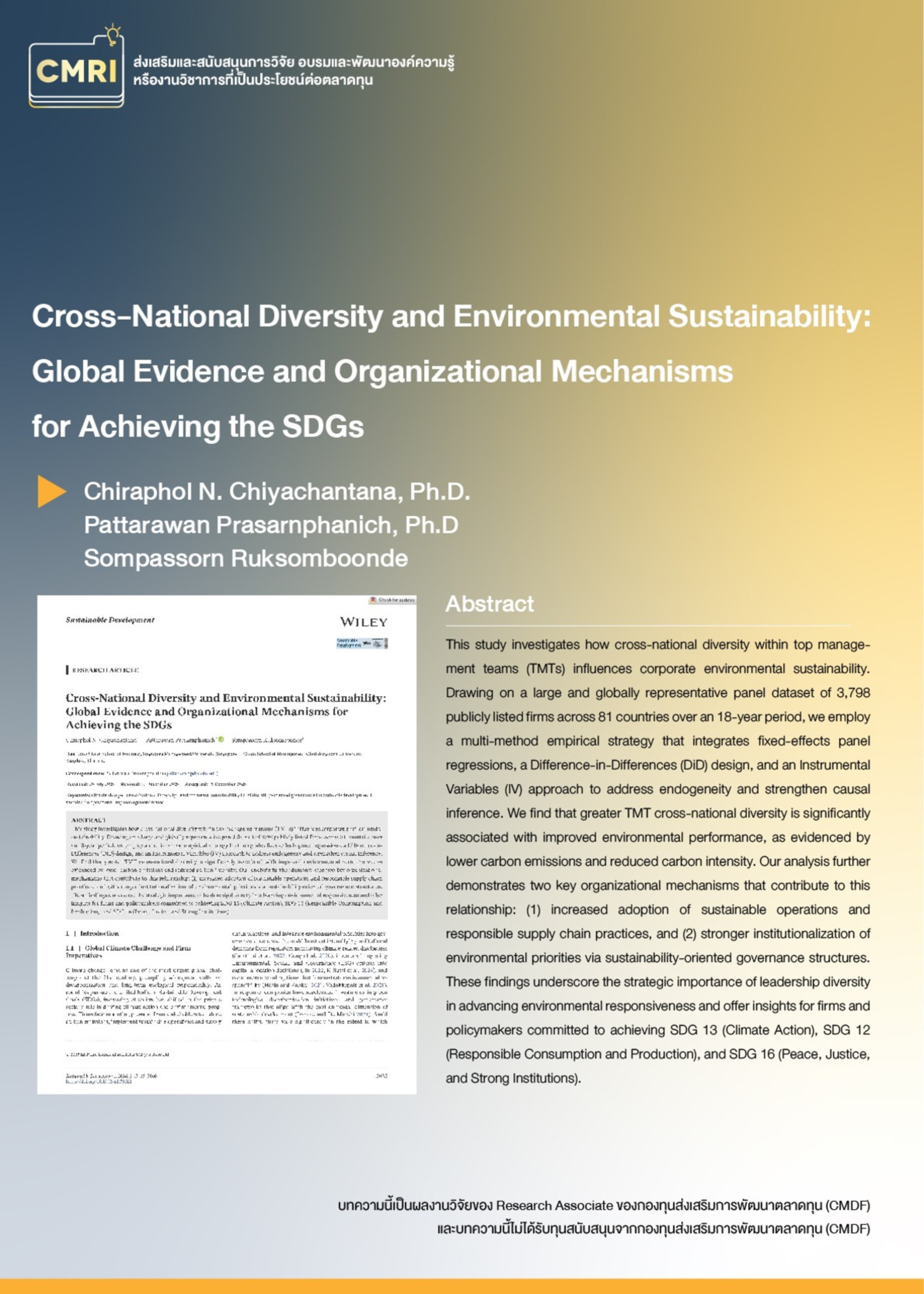
This study examines how cross-national diversity within Top Management Teams (TMTs) influences corporate environmental sustainability. Using a global sample of publicly listed firms across diverse institutional and regulatory environments, the research considers whether executives from different national backgrounds bring broader knowledge, experience, and perspectives that can shape firms’ environmental decision-making.
The findings show that firms with more cross-nationally diverse TMTs tend to have better environmental performance, reflected in lower carbon emissions and carbon intensity. Exposure to different regulatory systems and stakeholder expectations may help senior executives identify environmental risks and opportunities and incorporate sustainability more effectively into corporate strategy.
The relationship also extends beyond environmental outcomes. More diverse leadership teams are associated with stronger integration of sustainability into sourcing, supplier management, and corporate governance, suggesting that leadership diversity can influence how environmental priorities are translated into day-to-day organizational practices.
The study further suggests that the value of leadership diversity depends on the context in which firms operate. Its influence is particularly visible in carbon-intensive industries and in environments where external climate regulation is relatively less stringent, where internal leadership may play a greater role in driving environmental action. Overall, the findings position cross-national diversity not simply as a matter of representation, but as an organizational capability that can strengthen firms’ ability to respond to environmental complexity and advance sustainable development.
อ่านงานวิจัยฉบับสมบูรณ์ได้ที่:
https://onlinelibrary.wiley.com/doi/abs/10.1002/sd.70612
DOI: 10.1002/sd.70612
หมายเหตุ: บทความนี้เป็นผลงานวิจัยของ Research Associate ของกองทุนส่งเสริมการพัฒนาตลาดทุน